Author: Demetri

  • Revenge of the ‘Gator (1989)

    Revenge of the ‘Gator (1989)

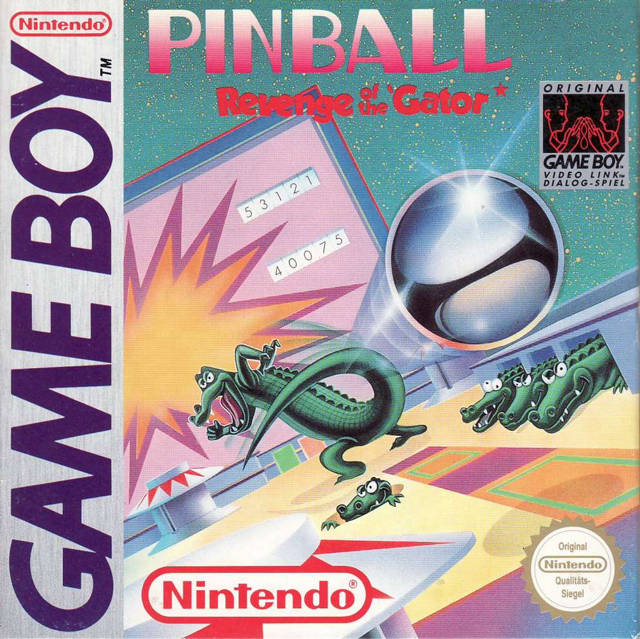
    This game represents so many firsts for this website. First HAL Laboratory entry of many! First pinball game, also of many! Not their first cart on the Game Boy though. I believe that’s Shanghai, which is straight up Mahjong solitaire with bangin’ tunes. We’ll get to that eventually, along with the ton of other tabletop adaptations that typified the early days of the DMG, but today is something a little bit faster! And also featuring tunes that bang!

    The first thing I did upon switching on Revenge of the Gator (or the far better Japanese title of The Great 66-Alligator Parade), besides watching the adorable gator dance number on the title screen, was tap A to launch the ball. It made its way up, stopped just shy of entering the table proper, and slid back down to the plunger so I could hold the button to give it the oomph it deserved. I immediately realized that even in ’89, HAL knew ball.

    RotG offers some incredibly smooth pinball on a speedy, gleefully impossible table. You can tell that HAL was excited by the concept of not having to replicate the limitations of a realistic pinball table because their first attempt resulted in a 4-tiered megastructure, with each tier having its own pair of flippers, as well as 3 bonus rooms that you effectively teleport to and from. Each section is displayed as its own screen – no scrolling, just switching upon leaving the current section – and you’d reasonably think that would be jarring, but it means you’re never missing the action or looking where you shouldn’t.

    Digital pinball is all about replicating feel. Convincing our lizard brain that we have in fact smacked a ball bearing is surprisingly difficult! Gator may have been made well before they started putting rumble paks in cartridges, but it still gets damn close thanks to its speed and deceptive generosity. The tips of your flippers are a tad further reaching than your eyes would have you believe and that little bit of extra control makes all the difference. The only area where RotG feels a bit weak compared to the real thing is in some of the fancier pinball maneuvers. Passes and juggles are tricky as you either smack the flipper at full force or not at all, and the ball is constantly jittering just a tiny bit to prevent getting stuck, but that’s a consequence of digital inputs and age more than anything else. Plus, the table is intentionally designed around you blasting your balls all over the walls.

    Of course you’re going to get robbed sometimes, that’s pinball baby! The bonus games are especially egregious in this regard, with #1 and 2 having a tendency to fire your ball in only to immediately hit a bumper and careen into the gutter. Hell, sometimes the ball saver doesn’t even do his job! The gator’s head is sloped and will occasionally just allow the ball to slide right off. Ask me how I know! Don’t trust that guy! He’s a little shit!

    Presentation-wise this game is charming from head to tail. From its Mambo #5-ass bassline with treble that only kicks in once the ball is in play, to the wacky point conditions involving feeding gators one moment and beaning them with the ball the next, to the gators themselves dancin’ and chompin’; every element of the production feels purpose built to put a smile on your face, so much so that it’s hard to muster any anger when it inevitably munches your digital quarter. None of that praise would save a bad pinball experience, but I think this is great! Arguably better than other pinball games that I’ve already played on the system that we’ll talk about another day! RotG has been my most pleasant surprise thus far and a heck of a debut for HAL on the list. There’s even a sick colorized romhack should you feel compelled to give it a go, and I’d highly recommend doing so.

    4/5

    – – –

    …hey, hey kid. You want a Protip?

    PROTIP: On the bottom-most section of the table, there’s a gator on the right side that’ll tail whip your ball if you shoot the gap next to it. Lift your flippers before it does so and instead of your ball arcing across the table, it’ll shoot up into the next tier every time. I’m no pinball wizard, but figuring that out sure made me feel like one.

  • Baseball (1989)

    Baseball (1989)

    My current play pile has been taking a bit longer to get through than anticipated, so this afternoon I figured hey, why not play a quick game of stickball? Hahahaha, “quick”.

    I feel like I should be more lenient with this cart. It was a launch title after all, even Nintendo didn’t really know what they were doing on the DMG yet, and its main draw was multiplayer which I have not touched. I know the history, I know the score, but…

    wow this is some awful baseball. This was a new experience for me, because I’ve never played by telegraph before!

    Look, I’m not a “sportsball” snob or whatever. I may be a nerd, but I’m the kind of nerd that participates in torpedo bat discourse, reminisces over the steroid era, and watches everything Ohtani does like a hawk. I like sports games! Especially baseball! This is a just a terrible baseball game!

    GB Baseball is agonizingly slow. Pitching, fielding, changing sides, almost every animation feels like it’s playing at 0.5 speed. Compared to NES baseball that’s honestly not too far from the truth! Watching fielders and runners alike trudge as the ball jutters across the sky frame by frame is excruciating, and you can barely see the field much less the ball if it gets some loft, so you’re forced to trudge players you can’t see towards a drop spot you don’t have. One of the benefits of digital ball is speeding the boring parts up, but this version feels like participating in a real life pickup game in the Ambien League.

    The one area that has some merit is the batting, which offers the bare minimum of acceptability. The camera swaps to behind the plate, you can reposition in the box, and the swing is pretty snappy. I ask for so little, and in this singular area Baseball manages to deliver, but surely we could have aimed a little bit higher?

    As bad of a time as I was having, I was willing to forgive a fair amount due to the age and legacy of this cart. Then I managed to smack a home run and all my good will vanished like an unsupervised box of Uncrustables in the dugout. The ball sloooooooowly drifted into the stands, a rectangle that said HOME RUN sleepily scooted its way from the bottom of the screen to the middle, and the scoreboard ticked up 1 by 1 to show the runs. Are you kidding me? Are you fucking kidding me? We don’t even get to see the runs??? It should be against the law to make a baseball game where sending one over the fence is this underwhelming! I did the fucking Thing, I demand satisfaction!

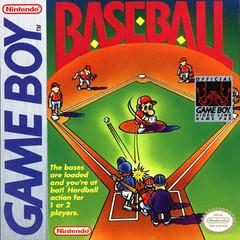
    I’m all for giving old games their due, and a lot of them are great, but the nicest thing I can say about Baseball is that I like its cover. Big Al wouldn’t tolerate such disrespect for dingers.

    1.5/5

  • Battletoads (1991)

    Battletoads (1991)

    One thing I’ve made a point of talking about elsewhere is the myth of objectivity in games criticism. Any piece of art can be critiqued with some degree of objectivity, but only to a point. In the case of video games this can mean things like dodgy framerates, reproducible bugs, dropped inputs, and so on. What you can’t quantify, and is significantly more important in an interactive medium, are the subjective elements. Gamefeel, execution of its mechanics, the quality and payoff of strategic (in this case I mean long-term planning) and tactical (short-term) decisions, and the satisfaction of performing tasks within the framework provided by the designers are just a handful of largely-if-not-totally subjective elements that carry massive weight. This is largely a matter of personal preferences, skill level, familiarity with the conventions employed, and a million other things that are a waste of time to get into here, but I think you probably get the gist.

    All of that preamble – and believe me that’s the truncated version, I could easily go on – is to say that while I can find many things worthy of praise in Battletoads (GB) on a technical, “objective” level, none of this surmounts how much I cannot fucking stand playing it. I love a good beat ’em up, and Battletoads has not and will never be a good beat ’em up.

    When you consider how early in the Game Boy’s lifespan this arrived, Rare pulled some frogdamn magic here. The sprites are massive, they animate smoothly, they use a lot of convincing faux-3D, and the performance is so much better than many games that came after it that honestly beggars belief. They even went so far as to make an entirely new set of levels here, despite the name match, that broadly work better on the Game Boy than the NES levels would! That said Rare eventually did go on to port the NES version with a different subtitle because sure, why not double dip on fucking Battletoads?

    Just…god, actually playing this thing? Sliding around everywhere? The total lack of significant animation cancels? Those awful rope sections? Obnoxious vehicle after obnoxious vehicle that all handle like a bar of soap? Having to memorize the fast sections because there’s no room for error? Bigass cartoon limbs with borderline improvised hitboxes taking half your health from nowhere? Ew. Ew. This game is fucking grimy, dog. It just feels bad in the hands, and as impressive as its technical aspects are, the bile starts bubbling up as soon as I see it in motion because that probably means I’m touching it.

    I’ll go one further. Moreso than many BEU franchises, Battletoads has a lot of defenders that are quick to get into the difficulty discourse. I’m going to head off anything git gud-adjacent at the pass with two points:

    1) I’ve already beaten Battletoads. Multiple Battletoadses. The NES one and this one. I am one of you! I still think this franchise sucks!

    2) This version? For the Game Boy? Actually pretty damn easy by comparison, barring some bits at the very end that you could just slam your continues into if you really needed. Hell, there’s an entire section in the back half where you just run from a boulder and are in basically no danger if you know what’s coming up.

    A game being challenging is a perfectly fine thing! What it isn’t is inherently virtuous. I fully understand that completing these games is a satisfying feat that comes with a side of bragging rights among those in the know, but that doesn’t make up for the game being so much worse than its contemporaries to actually play, as far as I’m concerned. Fuck the skin condition toad trio and the jet skis they rode in on. I’m glad their parents are too busy with Sea of Thieves to play with them anymore.

    2/5

  • Motocross Maniacs (1989)

    Motocross Maniacs (1989)

    Extremely funny that Konami eventually redistributed this as just “Bikers” years later. Guess the Overton Window of what qualifies as “mania” shifted from the 80s to the 90s.

    This game is basically Trials’ dad, only the courses are entirely designed around using bursts of nitro to make jumps. On a design level there is something fascinating about creating what’s essentially a platformer where hops are a limited consumable. Where do you add more? How many? How far should you be able to get without them? Do you demand perfection, or make it more of a speed game with emphasis on creative solutions and routing?

    Konami answered all of those in the following ways:

    Q: Where do you add Nitro?

    A: Almost exclusively in locations that require Nitro to reach.

    Q: How many?

    A: Enough.

    Q: How far should you be able to get without them?

    A: There will be a ramp on every level that is impassible without use of Nitro.

    Q: Perfection or creativity?

    A: Get the fuck out of our office.

    3/5

  • Mario Tennis (2000)

    Mario Tennis (2000)

    Look – I hear you. The Game Boy/GBC had so many excellent RPGs, yet my list thus far has been devoid of any. Don’t worry! I got you! First RPG down, and it’s one of the best on the system. Classic single party member ala Dragon Quest I, even! Just a bit of an unconventional battle system is all.

    My history with Mario Tennis is involved but not especially complex. I played the 64 version to death, always heard this was great, and never tried it until now. Every MT entry after the year 2000 was worse. Shame, that. Camelot, on the other hand, I have plenty of experience with, and I don’t just mean their iffier sports entries. Consider how confident they had to be to make both versions of Mario Tennis only to barely feature any Nintendo properties in one of them! That confidence is earned. Oh my god did they earn it.

    As an aside, one of my weaknesses as a reviewer is that I’m better at taking things apart than building them up. It’s easier to praise a game when you have criticisms to use as a springboard, you know? This review will likely be a bit weaker written than some of my others for this project because, spoilers, I barely have anything negative to contrast the positives with. The best I can do is note that I don’t like the font choices, or more specifically the shadows behind them, on a tiny Game Boy screen. I also find myself missing the ridiculously crunchy serve sounds from the 64 version; I swear hitting a Nice! serve in that sounds like a horse chomping into an apple. The Game Boy can’t really do that! These things don’t matter much, not really. The closest thing to a genuine issue is how the game handles leveling/stats, but I’ll talk about that later.

    This game has some of the best spritework on the entire GBC. The sprites would have been top notch on the Neo Geo Pocket Color, but they’re here! On the god damned Game Boy! Every player sprite is incredibly expressive, chock full of characterful details, to the point where they’re entertaining just to see in motion. Combine that with the smooth scrolling of the court in play and little to none of the fake 3D depth issues thanks to the immaculate spriting and lack of slowdown, and you’ve got genuinely excellent handheld tennis.

    Any game with Motoi Sakuraba music is going to be a joy for the ears and this is no exception. So many quality jams. This version’s rendition of Break Point is simpler but still gives me chills, especially when the rally goes long. Rare is the game that gives you your own boss music, but Camelot was operating on an entirely different level. Music that makes you want to black out and spike the ball directly into a child’s schnoz. Powerful stuff.

    God this game’s tennis plays so well, too. Almost everything I internalized from years of the 64 game was immediately transferable. You can steal so many points with an angled serve, drop shot, and crosscourt shot combo. Admittedly that’s true in real life too! What surprised me most in the gameplay itself isn’t its quality, it’s how different the opponents manage to feel. They nearly feel adaptive, even though I know that’s likely not the case. The way they shift to an easier center serve after hitting a fault or start running to the baseline more after getting schooled at the net feels more convincingly Tennis-y than some sim games I’ve played.

    The RPG elements are light but certainly felt. Speed ends up being the key stat because you always need to cover the court, but you will need another specialty to close out the tournament arc. Each level lets you boost one of the four areas of your game, but they often come at the expense of others, leading to some awkward break points where you’ll be more interested in what does the least harm VS boosting what you actually want. It’s not perfect, but it is interesting and forces you to adapt to your weaknesses rather than grind them all to dust. Levels don’t come the quickest from just playing matches, so after a few wins in the junior league I entered the Hyperballic Tennis Chamber that is the training building and climbed some double digit # of levels by whacking the ball into a wall 200 times. I made my PC a speed demon with a downright devious net game and my doubles partner became a nuclear gorilla who could barely move, but could plant the ball anywhere on the court at Mach 3. Not that I played much for doubles, mind. I will generally avoid having 3/4 of the game’s participants be bots if I can help it.

    In terms of escalation it goes intro, team rank/promotion arc, tournament arc, and The Post-Credits Introduction and Subsequent Destruction of Super Freakin’ Mario. Despite characters being chatty and full of personality there really isn’t much plot to speak of. I’m fine with that, to be clear! I suspect I wouldn’t be a huge fan of there being even more talking between matches. Some folks have complained about said matches being too long, which is a funny way to say you just don’t like Tennis. I do, which means I want to play the titular sport, and Camelot understood that they couldn’t have both words in the title be disingenuous.

    I do kinda love the Mario Section though. Spoilers? I guess? Do we really care? Have a courtesy warning, but I will think a smidge less of you if this is a legitimate cutoff.

    After the award ceremony ends and credits roll you find yourself back at the academy standing in the headmaster’s office. Out of absolutely nowhere he informs you of the following facts:

    • Mario exists in this setting. He has been offscreen, watching from the shadows the entire time.
    • Mario is the single greatest tennis player to ever do it.
    • Mario has taken an interest in you specifically, because your defenses are impregnable and your style is impetuous.
    • You must take a flight to Peach’s Castle immediately. The headmaster will not take No for an answer. I tried.

    Once you arrive it immediately becomes clear that you’re out of your depth. There is some kind of political situation going on, and I don’t mean the kind where the video game has women in it. The room has been split into factions, good and evil specifically, and the latter is absolutely intent on having your character play and defeat Mario on the court upon arrival as they haven’t managed to. Bizarrely, the imperial side informs the villains that Mario actually just invited your character there to chill post-tournament, which…isn’t true? As far as we know? This is clearly an attempt at deescalation, truth be damned.

    Anyway. The brothers Wa and Bowser insist that you do battle on their behalf. I accepted, of course, because I know where my loywalties lie. Mario was destroyed in straight sets and it wasn’t particularly close. The game ends abruptly afterwards, presumably due to committing the equivalent of a tennis-themed Franz Ferdinand assassination. My love of the game transcends my general aversion to causing international incidents. Obey Wario. Destroy Mario.

    4.5/5