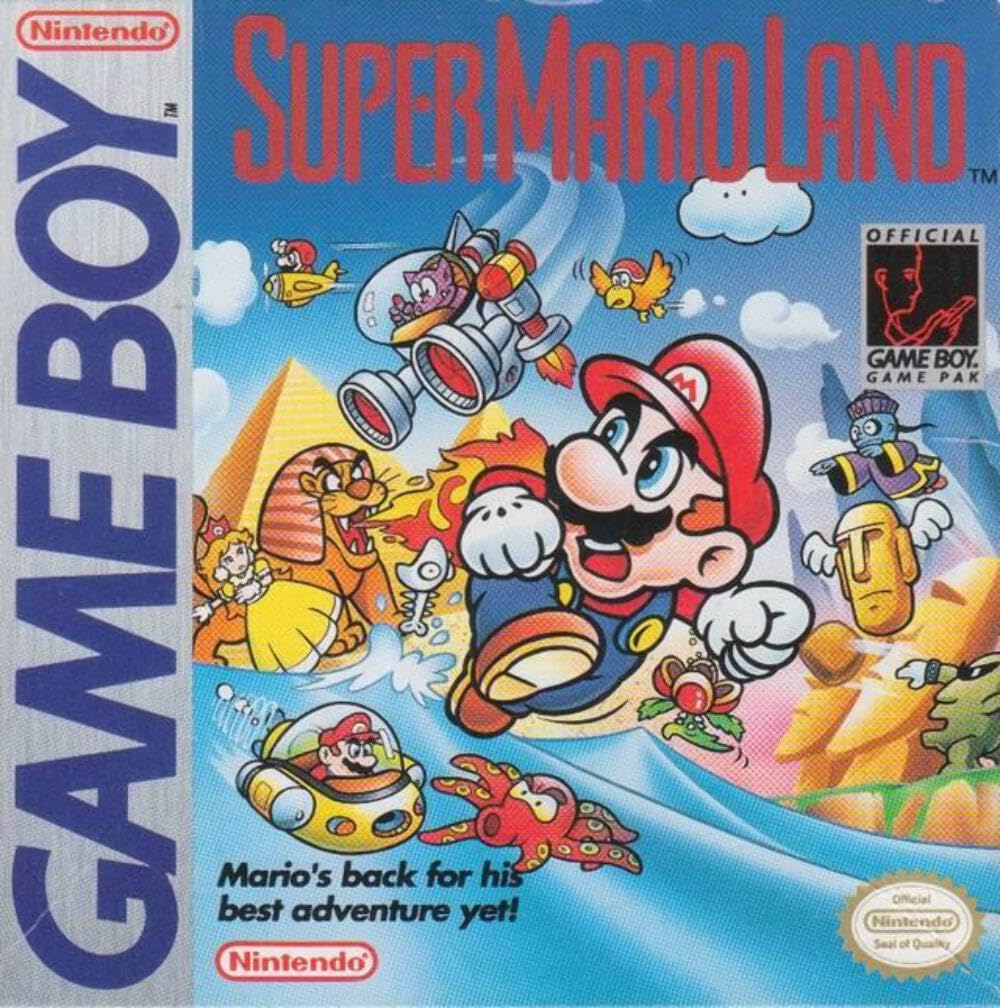
Tag: nintendo

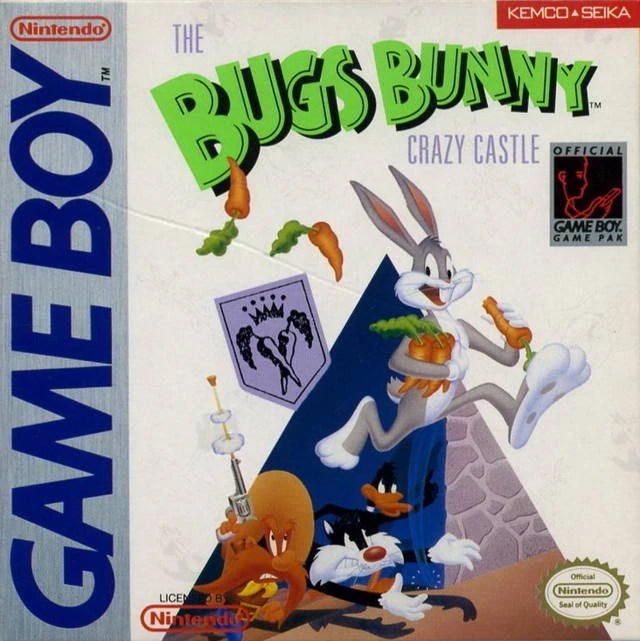
  • The Bugs Bunny Crazy Castle (1989)

    The Bugs Bunny Crazy Castle (1989)

    Every time I look at this title I feel compelled to correct it, but no, this is THE Bugs Bunny Crazy Castle. The sequel is too! Not the third or fourth though, those are just Bugs Bunny: Crazy Castle 3 and…Bugs Bunny in Crazy Castle 4? In? Featuring? These naming conventions are crazier than the castle itself!

    This is neither the time nor place nor author to regale you with the entire history of Crazy Castle and its various brand affiliations. Someone else on the internet can do that for you. I’m more interested in focusing on the game itself. Believe it or not I’ve never actually sat down and played any of these for more than a fleeting moment on a system I did not own. You absolutely knew someone who had it, probably played it on a bus ride or something, but the rate of exposure was far higher than the rate of actual direct play. Extremely cousin-core cartridge.

    This game, hell this entire series, has always been a bit of an enigma to me. Omnipresent and immediately recognizable, yet difficult to discern from one entry to another. Never loathed, rarely loved. I knew just how many of these were ahead of me so I figured I should get through one relatively early on in this project’s life, y’know? Figure out where I stand in the Crazy Castle Discourse. Turns out? Pretty alright! If you were purchasing a Game Boy in the year of our lord 1989, I’d even go so far as to say that this’d be one of the better choices!

    The game design here is leaner than rabbit meat, to the point where our titular Bunny can’t even jump. Super weird! Bugs is forced to hoof it through 80 levels of slightly increasing difficulty, Scooby-Doo-ing his way through connected doors and pipes to collect all the carrots in the stage. Several other marketable mascots try to prevent him from eating his veggies. What does all of this have to do with the rescue of Honey Bunny, the stated motivation in the manual? Fuck if I know! She’s not even shown in the game at any point. I gotta imagine she was abducted for sinister Lolafication purposes and Bugs was just too slow to save her. Or maybe…maybe he didn’t want to? Gasp!

    I said I wanted to focus on the game and here I am writing Lola Bunny fanfiction, exactly what Al Gore built the internet to do. It’s fun! It plays well! Movement isn’t exactly snappy but it is responsive, and little touches like continuing to run straight when you finish ascending or descending stairs by holding the same input shows a level of attention to detail in the execution that many games of this era lacked. I didn’t even mind the small set of jaunty little tunes that repeat throughout the thing! The levels are as varied as you could reasonably expect given that there are so many of the fuckers with so few mechanics, and I was surprised at how rarely I felt screwed by the fact that you can only see what lies ahead by scrolling the screen.

    You know who deserves an entire paragraph? Sylvester. There are a handful of enemies and they all behave a bit differently in a Pac-Man ghost kinda way, but none of them compare to the Blinky-esque purrsuit this tuxedo’d toolbag puts you through. Once he has your scent he’s going to follow you at a reasonable pace forever. Much like a mall cop who spotted a teenager pillaging an unattended free sample tray, avoiding him is mostly a matter of having marginally better cardio and not getting distracted by the siren smell of Auntie Anne’s.

    It’s somewhat telling that an enemy who can actually follow you represents the zenith of Crazy Castle 1’s difficulty. There’s a bit of reputation for challenge with this one, but I have to imagine those are childhood memories talking because it’s kind of a breeze. I never lost enough lives to require a password and only found myself using them to take breaks, because 80 floors is just too crazy for one sitdown, and the game saw fit to top my lives off when I did! Anybody could make it through this if their attention span holds. Admittedly this thing is repetitive and I wouldn’t fault anyone for dropping it, but I’m weak for arcady progression and there’s just enough tension in these carrot heists to make pulling them off satisfying.

    Anyway, yeah! That game your weird classmate owned turned out to be pretty good, no matter how unmemorable it may be! My hottest take from it is that I’d rather play this than Lode Runner. In conclusion I just want to inform you that upon clearing level 80 Bugs just waddles onto a mostly blank screen from nowhere before exclaiming, and I am presenting it verbatim down to the formatting:


    CONGRATURATIONS !!

    YOU ARE

    GOOD PLAYER !!

    And you know what, Kemco? I am. I am good player. Thank you for noticing. I think this game has made me dumber.

    3/5

  • In Your Face (1990)

    In Your Face (1990)

    Oh god dammit Jaleco, I was just saying so many nice things about you. You’re going to make me look like a fool and I do that enough already! The site calls itself wack for chrissake – you’re damaging what little credibility I’ve left for myself!

    In Your Face is a waste of 41 kilobytes. This is the barest of bones, devoid of even marrow to sustain you. It’s kind of a riff on Jordan vs Bird, which is already not a great starting point. Don’t worry though, the GB port of that mess didn’t show up for another two years and it’s somehow worse!

    Anyway, IYF. It’s shooting contest ball, meaning you get one hoop and need to run to half court a lot. The modes on offer are 1v1, 2v2, and Off. You can futz with the settings – time, score, duration, etc. That last one should be set as short as possible.

    Once you actually hit the court the game start emitting a horrible set of bloops that legitimately had me wondering if my speaker was ok for a moment. It sounds…wet? Waterlogged, somehow? I’ve listened to this game’s music with and without headphones now and there’s just something viscerally unpleasant about it. It makes me tense my neck up whenever it kicks on and I mildly regret looking it up one last time for the purposes of this writeup.

    Then you play it and everything goes off the rails. The game consists of getting possession of the ball via a semi-reliable steal, sprinting up to the hoop, and triggering the canned dunk animation. Taking longer shots is a good way to lose. The only chance your opponent has of stopping a layup is getting there first, and I legitimately could not tell you what does or doesn’t qualify for a block. I think you need to jump first? Maybe? Normally I’d play a few more times to figure that kind of thing out, but I’m not going to do that for two reasons:

    • I won my first game against the CPU
    • this game sucks

    What Jaleco has demonstrated here is that if you strip baseball down to its essence you end up with a relatively simple, but enjoyable game. Distilling basketball in a similar manner could work, but not when you take all but 2-4 of the players with it. Get this mess out of my face and onto the ugly part of the list.

    1/5

  • Bases Loaded (1990)

    Bases Loaded (1990)

    Wait, it only took a year to make a baseball game that’s this much better than 1989’s Baseball? Are you kidding me? I’m starting to think this “Nintendo” company doesn’t know what they’re doing!

    Bases Loaded was a long-running franchise on the NES, so it stood to reason that Tose (and by extension Jaleco) would want to get a version out quick for their first western release on the Game Boy. America was surely craving quality baseball on the brick at this point, especially after Nintendo struck out the previous year, and Tose delivered exactly that.

    There’s no twist to this writeup. I was genuinely surprised at how well this played! Responsive batting, deeper pitch mechanics where you set the target location then adjust your pitch type, and fielding that doesn’t feel like you’re playing on the moon! Bases Loaded’s big thing was showing the game from the pitcher’s mound rather than the plate and that makes its way into this port too. Later NES games in the franchise went so far as to flip the positioning of the field while on defense, which my muscle memory hates, so I’m glad that’s not what we’re doing here.

    Where this differs from its NES counterpart is mostly the presentation. Lack of color aside, you’d be forgiven for not realizing this was Bases Loaded at all! Players are chibified, though not quite to the extent of a Power Pros bobblehead, and the perspective swaps depending on if you’re batting or pitching. This is peak link cable “each player gets their own screen, we can actually show them what they want to see” gaming for 1990! Sure we lose out on the crunchy voice samples the original game had, but that’s a small price to pay for a game that arguably plays a bit better than its dad!

    There are some funky omissions from the actual sport, most notably not being able to bean a batter with the ball. It just phases through them and counts as a ball! That’s weird! I also didn’t manage to get an infield fly to happen despite intentionally popping a few awful hits entirely on purpose. Quality dingers, though? Very much on the menu. Lofting the ball past the screen’s boundaries and watching the fielders scramble to the wall brings me such joy when it’s done even halfway decently, and BL does it just a bit better than that! You can adjust your swing with up and down, meaning every at bat is an opportunity to hold down and send that ball to the parking lot. There’s even a proper home run celebration! Sure it’s not a blowout, but they tried!

    I may be feeling a bit too generous in the wake of how rough Nintendo’s first party offering was, but I really enjoyed this port of Bases Loaded! It does everything you’d expect a baseball game of this era to do and not an iota more, but does it well. Snatching a stand-bound ball out of the air inches from a child’s hands makes me feel powerful.

    3.5/5

  • Yakuman (1989)

    Yakuman (1989)

    Oh here we go“, you’re probably thinking. “Western writers always dismiss Mahjong games. Let’s see how he clowns on it. I bet he doesn’t even know what furiten means!

    Guess again, pessimistic reader I’ve invented in my head! I love Mahjong! Especially riichi! Many years ago I learned another variant from an auntie as is tradition, then got into riichi over lockdown and never looked back. I was legitimately excited to try this one as it’s been a minute since I’ve clacked some tiles. How was this implementation?

    Ehhhhhhh.

    Yakuman’s fine. The problem isn’t the quality of the interface, presentation, etc. Honestly it’s all laid out pretty well! Everything’s visible on a single screen and while not having color is a downer it’s manageable, and the inputs are intuitive. The bot opponent makes choices pretty quickly too, which is a rarity for early Game Boy board games! No, the issue is that this is exclusively 2 player Mahjong and that’s just not the best ruleset. I’m not even a diehard 4p or bust kind of guy in matters of Maj’ – I actually love playing with 3! 2p just doesn’t cut it for me most of the time, not without some wacky rule variants, different yaku, something to spice up the I-go-you-go. There are so many better 2p rummy-adjacent options out there!

    Though y’know, I say that now with the benefit of hindsight, but how many competitive options existed in ’89 beyond just playing Gin with an actual real life deck of cards? 2p riichi via a link cable is legitimately a pretty cool use case for the DMG and it certainly beats Nintendo’s previous attempt at standalone virtual Mahjong. I would not be shocked if this killed it among the grandma set in Japan, though I bet the eye strain required to read the characters on the original screen may have scared off more than a few. I appreciate this thing for what it does, even if it’s not all it could have been.

    2.5/5

    Bonus zone because apparently I like to do those when I find extra material – there’s an English translation patch! I didn’t touch it so I can’t vouch for the quality, but there’s very little text in-game so I’d be surprised if it wasn’t sufficient. What it won’t do is teach you Mahjong, but the game already didn’t really do that. Hell, even its manual spends basically no time on the game itself as much as how to operate it. Tile-curious folks will still want to look elsewhere, this one’s for those who are A) already in the know and B) current year Game Boy enthusiasts. Pretty narrow venn diagram, but know that if you fall into it that we are kindred.

  • Castlevania: The Adventure (1989)

    Castlevania: The Adventure (1989)

    Ok. Deep breath. C:TA is one of Those Games, the particularly notorious kind. I’ve heard people say this is the worst Castlevania game, full stop. Of course it has its defenders – what doesn’t? – but I’ve seen so much bile spewed in this thing’s general direction over the years that I just assumed this game was going to hang out with Marble Madness on The List.

    Spoilers: nah! I thought it was fine. Incredibly uneven and punishing to the point where I couldn’t in good conscience recommend it to anyone who doesn’t share my particular strain of brain poison without heavy use of save states, but fine. Its issues are myriad, both design and technical, yet the vision is evident and it almost, sort of, kinda works. It’s an early Game Boy game, is my point.

    In tepid defense of this cart, you’ve got to look at the other games the DMG received in ’89. Beyond Mario Land there wasn’t a hell of a lot of NES-style action to be had on the platform. Konami was going for it, and I respect that! Granted they fucked it up to the point where some of the staff went on to form Treasure so they could make a good video game for a change, but the attempt was made!

    From first impressions alone you’d be forgiven for thinking they nailed it. The sprites look great, the whip feels snappy, and most importantly they managed to cram 80’s Konami music into a Game Boy and it sounds sick. Everyone talks about Battle of the Holy and justifiably so, but my standout was Revenge because I am eternally weak for Alberti bass or any kind of funky arpeggio, especially when I’ve got a whip in hand and a Dracula that owes me money.

    Then you actually start making progress and the cracks begin to affect the property value. Chris Belmont moves exclusively at a tiptoe and is oddly unresponsive aside from the whip button. I found inputs getting eaten upon starting and landing jumps. He also doesn’t know what a subweapon is – this game doesn’t have ’em! Hearts even heal you, which required more of a mental adjustment than I care to admit. Instead you pick up orbs (aka THE CRYSTAL per the manual) to give your whip some extra oomph and reach, then again to add a fireball projectile ala any Zelda game with the laser. Keeping that comparison going, if you get hit you lose your fireball. Get hit again and you’re reduced to snapping your belt at demons. Not ideal!

    You can imagine why they would’ve thought this change in system might work. Keep it simple for the Game Boy, then design the levels around those limitations. Sure, in theory! In practice every level past the first – and there’s only 4 in total, by the way – is an exercise in wringing blood from this already dry stone. Level 2 throws several pixel perfect jumps at you, some of which are on falling platforms that don’t always like to let you jump off of them. Level 3 is Oops All Autoscroll, chock full of traps that’ll just kill you if you don’t already know what to do. Level 4…is basically just a Mega Man level? Lots of single screen figure’em’outs as opposed to heinous insta-death trickery. Challenging for sure, but never as obnoxious as what precedes it. Game has good bookends, I suppose!

    These levels and their constraints wouldn’t be so bad if the game was more solid on a technical level, but C:TA chuuuugs. You can feel the sludginess increase with each individual moving sprite added on the screen. Chris by himself is fine, one enemy feels worse but manageable, and everything past that will slow the game down to the point where you’d think you were playing an overambitious shmup, even though you’re just trying to whip a bat while a zombie hits the griddy in the background. This is demonstrated especially well by the Punaguchi, an enemy that solely exists to attack your frame rate by wiggling in place and firing a bouncy ball that’s faster than literally everything else in the game. This bottlenecks the performance something fierce, which isn’t great when the game just turned into Breakout and you’re the brick!

    Compared to the levels they’re in charge of, the bosses feel like they’re intended to be a victory lap. The first is the classic “guy who gets demoted to normal enemy” scenario, second is a swarm, third is a bird man who can’t figure out how to actually hit you, and fourth is Dracula, complete with a second phase, neither of which are hard once you die to him once or twice to learn his pattern. Bosses being chumps is a pretty common thing in a linear ‘Vania and I get that Chris’ moveset is too simple to allow for much complexity, but I was surprised at how little these required of me.

    Don’t think I wasn’t very done with this game once I finally yanked Dracula’s wallet, though. C:TA is frustrating. It feels closer in spirit to an arcade quarter muncher than an NES ‘Vania, constantly introducing new ways to send you back to the start of the level that you have no hope of figuring out on your first couple attempts. The entire middle of the game just kind of being ass really hurts it, and as much as I’m complaining, it is still disappointing that this thing only has a whole 4 levels. I haven’t covered Mario Land 1 yet but I am familiar with it already, and I can tell you that Nintendo’s attempt to Game Boy-ify their NES flagship went far better.

    …so why the hell did I loop it?

    I could have stopped! I whooped Dracula’s ass! I beat The Bad ‘Vania! There’s no reason for me to subject myself to th-wait, I know why. It’s because this is actually a Ghosts ‘n Goblins game, and I have a sickness.

    Think about it for a sec. The upgrade system, lost piece by piece? The diabolical instant death traps? The rock and a hard place enemy placement? The performance not keeping up when things get hot and heavy? The fact that you can, in fact, loop? The amount of enemies you’re better off just ignoring? I know GnG when I see it, and that’s GnG! Forget the lack of subweapons – we should be grateful that the Konami top brass didn’t insist on adding poorly-placed pickups that replace your whip with a pool noodle! There is just something about this kind of brutal Capcom-ass design that works for me, even when it’s absolutely not at its best, and this is very much one of those.

    The internet loves a reevaluation. “This Game is Good, Actually”, “This Classic Sucks, Actually”, “This Game I Grew Up With is Actually a Secret Peak Game Design Masterpiece and You Just Don’t Get It”, take your pick. That’s not my scene. I just want to play these games and rank ’em, y’know? I won’t lie to you and say C:TA is great, but it is nowhere close to the worst game on the system. This isn’t even the worst time I’ve had playing a Castlevania game! I liked it enough to play it past completion and that’s worth something. Not a lot, granted, but something! You don’t need to play this, but if you’re ludologically curious or a ‘Vania completionist I have trouble believing you’d loathe it. Sure it’s a bit of a disaster, but it muddles through despite that, and we should all aspire to do the same.

    2.5/5

    – – –

    Bonus section! This won’t affect the placement on The List, but I do want to shout out the incredibly cool ReBalance created by Bofner. Chris gets the lead out and upgrades to a legitimate Belmont Strut! Your whip isn’t nearly as fragile! You get a checkpoint right before Dracula that doesn’t suck! It’s just fun start to finish, even on level 3! It’s also notably easier, arguably to the point where it compromises the original design intent, but given that even Masato Maegawa isn’t a fan I suspect no one involved would mind. If you’re Adventure-curious I’d definitely give the original a try first, but more so you’ll appreciate the changes made than anything else.